If your Cornwall business is not showing up on Google — or barely showing up — you are not alone. It is one of the most common concerns among local business owners, and it is almost always fixable once the specific cause is identified. The problem is that “not showing up on Google” can stem from several quite different issues, each with a different fix. This guide works through the most common reasons and what to do about each.

First: Which Kind of Google Visibility Are You Missing?
There are two distinct places your business can appear on Google, and they are driven by different signals:
- Google Maps / Local Pack: The map with three business listings that appears for local searches like “plumber Truro” or “café near me”. This is driven primarily by your Google Business Profile, not your website.
- Organic results: The blue links that appear below the map (or on their own for non-local searches). These are driven by your website’s content, technical setup, and authority.
Many Cornwall businesses are invisible in one but not the other. A business with a good website but no Google Business Profile will not appear on the map. A business with a GBP but a poor website will appear locally but not for broader searches. Identify which type of visibility you are missing first — the fixes are different.
Reasons You Are Not Appearing in Google Maps / Local Results
Your Google Business Profile is missing, incomplete, or unverified
If your business does not have a Google Business Profile at all, it cannot appear in local map results. If it exists but is unverified, Google will not show it prominently. If it is incomplete — missing opening hours, no photos, no service description — it will rank below competitors whose profiles are fully built out. Setting up, verifying, and optimising your Google Business Profile is the single highest-impact action you can take for local visibility, and it is free.
Your category is wrong or too generic
Google Business Profile categories are one of the strongest signals Google uses to match your business to local searches. “Restaurant” is far less specific than “Seafood Restaurant” or “Cornish Pasty Shop”. Use the most specific category that accurately describes your primary business, then add secondary categories for additional services. A surprising number of Cornwall businesses are set to an overly generic category and wonder why they do not appear for specific local searches.
Too few Google reviews
Google reviews are a direct ranking factor in local search. A business with 2 reviews will consistently rank below one with 40, everything else being equal. Actively collecting reviews — asking at the right moment, making it easy with a direct link, following up — can transform your local ranking position. Read our guide on getting more Google reviews for your Cornwall business for practical approaches that work. According to BrightLocal’s Local Consumer Review Survey, 98% of consumers read online reviews for local businesses before making contact — making review volume one of the most measurable local ranking and conversion signals available.

Reasons Your Website Is Not Appearing in Organic Results
Your site is blocking Google from indexing it
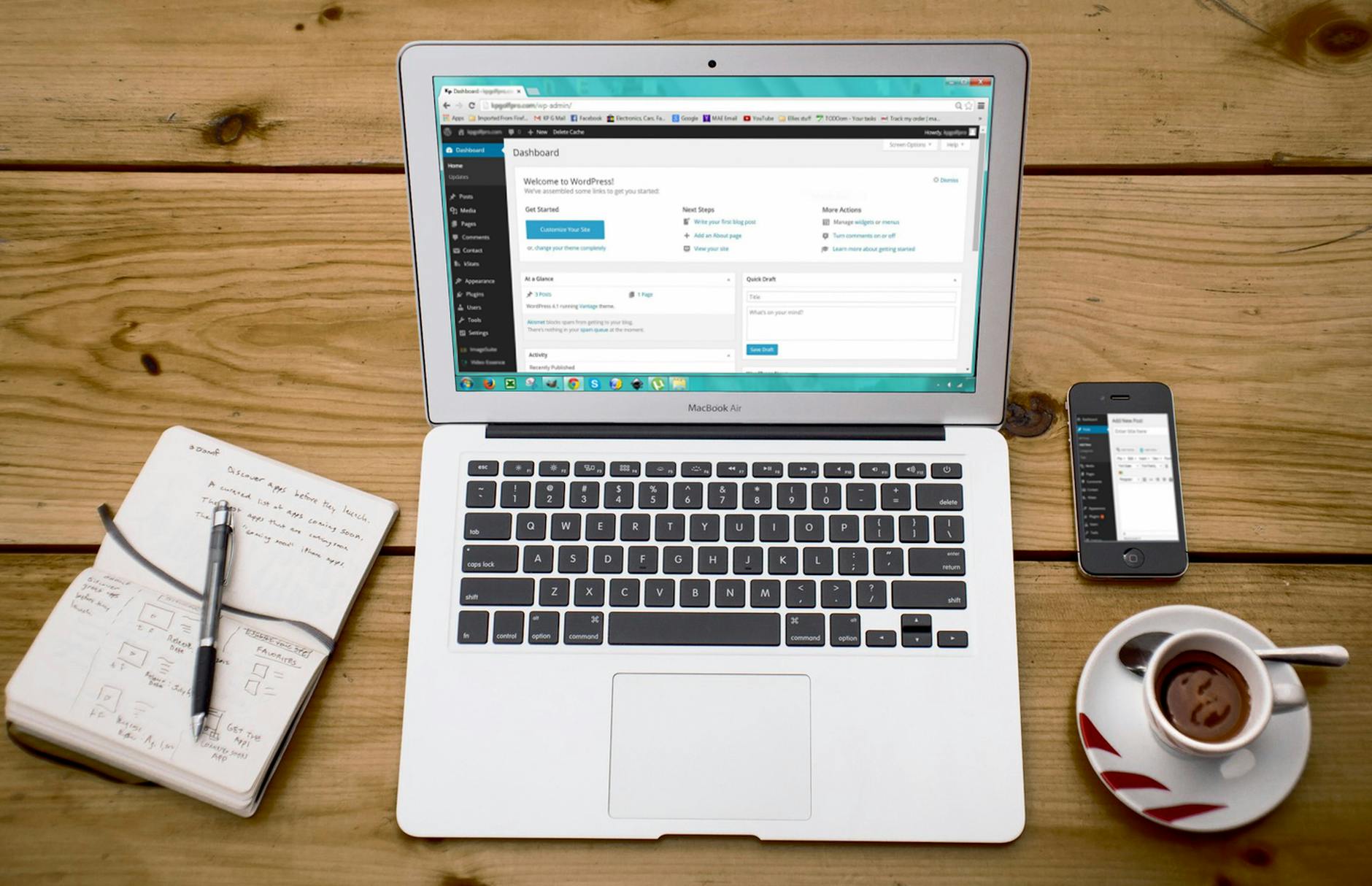
It sounds extreme, but it is surprisingly common — particularly on new websites that started life in development mode. A single setting in WordPress (or most CMS platforms) called “discourage search engines from indexing this site” can prevent your entire website from appearing in Google. Check your WordPress settings under Settings > Reading. If “Search Engine Visibility” is ticked, untick it immediately and allow a few weeks for Google to index your site.
A related issue is a noindex tag added to individual pages during development and never removed. Check key pages — your homepage, services page, contact page — in Google Search Console to confirm they are indexed. Go to URL Inspection for each page and look for “Indexing allowed: yes”.
Your website is too new
Brand new websites take time to build authority and rank. Google needs to crawl and index your pages, assess the quality of the content, and understand where your site fits relative to established competitors. For new websites, allow three to six months before drawing conclusions about why you are not ranking. Read our honest guide to how long SEO takes for Cornwall businesses for realistic expectations. Industry analysis by Ahrefs found that the majority of pages ranking in the top 10 on Google are at least two to three years old, reinforcing why starting SEO early compounds results over time.
Your content does not include the terms people search for
If your website never mentions the services you offer or the locations you serve in plain, searchable language, Google cannot match you to relevant searches. A common issue on Cornwall business websites is beautiful photography with minimal text, or a homepage that says “Welcome to [business name]” without ever stating clearly what the business does or where. Google ranks content — if there is no content to rank, your site will not appear.
Every key service should be named explicitly, alongside the town and county you serve. “We offer garden landscaping services in Truro, Falmouth, and across Cornwall” is indexable content. An image of a garden is not.

Your website is slow
Page speed is a direct Google ranking factor. Websites that take more than three seconds to load are penalised in rankings and lose visitors before they have read a single word. For Cornwall businesses on shared hosting with an unoptimised WordPress installation, this is extremely common. See our detailed guide to improving website speed for Cornwall businesses for specific fixes. The most impactful changes are usually image compression, enabling caching, and switching to a faster hosting environment.
Your page titles and meta descriptions are poorly written or missing
The title tag is one of the most important on-page SEO signals. A homepage titled “Home” or “Welcome” tells Google almost nothing about your business. Every page on your site should have a unique, descriptive title that includes your primary keyword and location. “Landscape Gardener in Truro, Cornwall | [Business Name]” is far more effective than “Home”. If you are unsure how to check your page titles, a free tool like Screaming Frog’s SEO Spider can crawl your site and surface missing or duplicate titles quickly.

You Are There — But Not on Page One
Sometimes businesses are technically indexed and appearing in Google results — just not on page one. If your site shows up when you search your exact business name but not when you search the services you offer, the issue is not indexation — it is authority and relevance. Appearing on page two or three for competitive terms like “electrician Cornwall” or “holiday let St Ives” means Google has found your site, understood what it is about, but does not yet consider it as authoritative or relevant as the sites ranking above you.
This is the territory where ongoing SEO work — content development, link building, review accumulation, and technical improvements — makes the difference. It takes time, but it is achievable for the majority of Cornwall businesses in competitive but not hyper-competitive niches. See our guide on affordable SEO options for Cornwall businesses for what realistic improvement looks like and what it costs.
Inconsistent Business Information Across the Web
Google cross-references your business name, address, and phone number (NAP) across your website, Google Business Profile, and third-party directories. Inconsistencies — different phone numbers on different sites, an old address, variations in business name spelling — create confusion and suppress your local rankings. Check that your NAP is identical everywhere: your website footer, your Google Business Profile, Yell, Bing Places, TripAdvisor, Facebook, and any sector-specific directories relevant to your business. Google’s documentation on local ranking identifies relevance, distance, and prominence as the three factors it uses to rank businesses in local search results.
What to Do Next
If you are not sure which of these issues applies to your site, the fastest way to find out is a free tool called Google Search Console. Set it up, verify ownership of your site, and look at the Coverage and Performance reports. Coverage shows you which pages are indexed and which have errors. Performance shows you which searches your site is already appearing for — even if you are not aware of it. Between these two reports, you will usually identify the core issue within an hour.

If you would rather have someone diagnose the issues for you — and get a clear action plan for fixing them — Digital Evergreen offers a free initial conversation for Cornwall businesses. We will look at your current visibility honestly and tell you what the likely issues are and what it would take to fix them. Get in touch to book a free call, or read through our services page to understand how we work with Cornwall businesses.