Most Cornwall holiday let owners are paying 15–25% commission to Airbnb, Sykes, or Booking.com on every single booking. That’s not a fixed cost — it’s a choice, even if it doesn’t feel like one. SEO is how you build your own direct booking channel, and the demand is absolutely there: search interest for Cornwall holidays rose by 15% in the first half of 2025 compared to the same period in 2024. Your future guests are already searching. The question is whether they find you directly, or find you through a platform that takes a significant cut for the introduction.
One important note: GBP works best for properties you let directly — where guests can contact you, visit a website you control, and make a direct enquiry. If you exclusively list through OTAs and don’t have a direct booking option, GBP will still build visibility, but you’ll need your own website and contact details to convert that visibility into direct bookings.
And it’s worth bearing in mind: 71% of GBP interactions happen on mobile. Someone on a beach in Falmouth, thinking about coming back next summer, searching on their phone — that’s your audience. Your listing needs to be complete enough to answer their questions instantly.
Your Website: The Four Things That Actually Matter
There’s a lot of noise around SEO, and most of it doesn’t apply to a Cornwall holiday let. Here are the four things that genuinely move the needle.
1. A Dedicated Page for Each Property
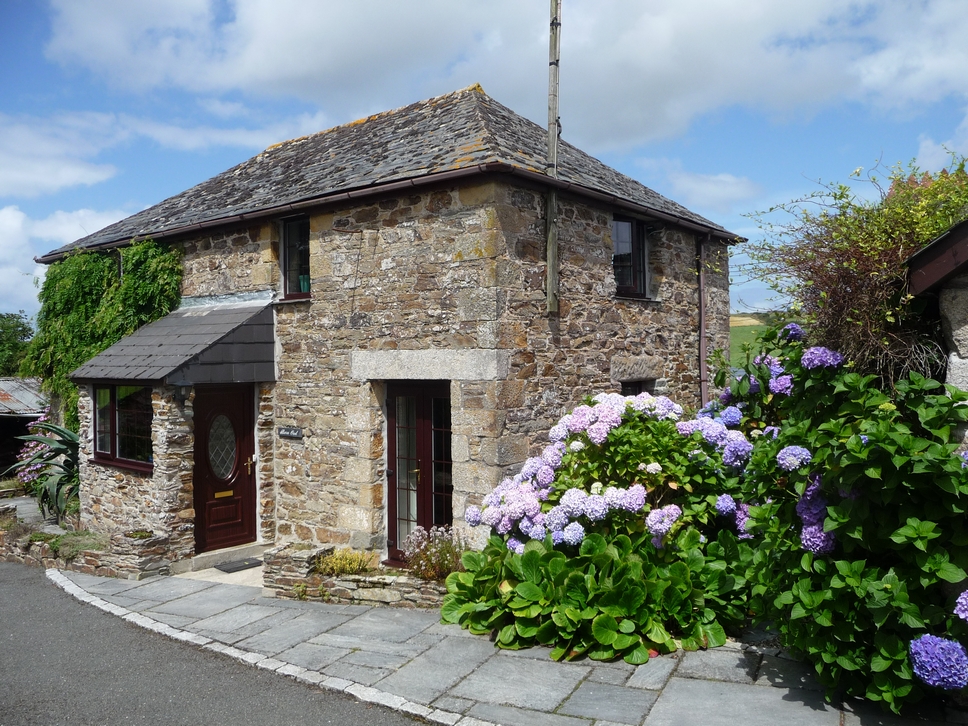
If you have multiple properties, each one needs its own page — not a gallery view, not a listing buried in a grid. Google needs to understand exactly what each property is, where it is, and who it’s for. The page title matters enormously. “Sea View Cottage Near Mousehole, Cornwall” will rank for relevant searches. “Property 2” will not.
2. Use the Words Your Guests Actually Search
Most holiday let websites describe properties in estate agent language — “charming coastal retreat” — when their guests are searching in plain English: “dog-friendly cottage near Porthcurno” or “Cornwall cottage hot tub sleeps 6”. On every property page, include the word “Cornwall” explicitly, your specific village or area, the nearest recognisable beach or landmark, and your key features in the language guests search.
3. Page Speed and Mobile Performance
Given that 71% of local searches happen on mobile, a slow-loading site on a phone loses guests and signals to Google that your site doesn’t serve users well. Test for free on Google PageSpeed Insights (pagespeed.web.dev). A score below 50 on mobile is worth addressing.
4. A Clear Booking or Enquiry Path
Google tracks what users do after they click. If they land, can’t find how to book, and leave — that’s a negative signal. Every property page should have a visible, working availability calendar or contact form. A guest who can’t find how to book in 10 seconds will go back to Airbnb and book there instead.
The Cornwall Seasonal SEO Calendar
SEO takes time — typically 3–6 months for content to gain traction. That means if you want to rank for “Easter cottage Cornwall” in March, you need to publish or update that content in January at the latest.
| Season | Publish / update by | Target searches |
|---|---|---|
| Easter & Spring breaks | January–February | “Easter cottage Cornwall”, “spring break Cornwall” |
| Summer peak (July–August) | March–April | “holiday cottage Cornwall August”, “dog-friendly beach Cornwall summer” |
| Autumn half-term | July | “October half term Cornwall”, “family cottage Cornwall October” |
| Christmas & New Year | September | “Christmas Cornwall cottage”, “New Year cottage Cornwall coast” |
| Last-minute bookings | Year-round | “last minute cottage Cornwall”, “available this weekend Cornwall” |
23% of Cornwall bookings are made within four weeks of the arrival date — a figure that’s been rising year on year. A dedicated “last-minute availability” page on your website, updated regularly, can capture this segment year-round without depending on a platform to advertise it for you.
Keywords Cornwall Holiday Guests Actually Search For
Location-Based
- “holiday cottage [village] Cornwall” — Padstow, St Ives, Rock, Mousehole, Fowey, Falmouth, Port Isaac, Perranporth, Bude
- “self-catering [area] Cornwall” — West Cornwall, North Cornwall, the Roseland, the Lizard
- “cottage near [beach] Cornwall” — Fistral, Porthcurno, Kynance Cove, Porthminster, Watergate Bay
Feature-Based (the ones that convert)
- “dog-friendly holiday cottage Cornwall” — consistently one of the highest-volume holiday let searches in the UK
- “Cornwall cottage with hot tub” — premium feature, searched year-round
- “sea view cottage Cornwall” — strong aspirational search
- “Cornwall cottage sleeps 8” (or 10, or 12) — group bookings are high-value, lower competition
- “accessible cottage Cornwall” — underserved market, often easier to rank for
- “child-friendly cottage Cornwall” — high volume in school holiday windows
Seasonal and Intent-Based
- “last minute cottage Cornwall”
- “half term cottage Cornwall”
- “romantic cottage Cornwall coast”
- “winter breaks Cornwall cottage”
- “New Year Cornwall holiday cottage”
Reviews: Your Most Powerful Local Ranking Signal
In local search, Google treats reviews as one of its most important ranking signals — not just the number, but the recency, the variety, and crucially, whether the owner responds. 88% of people would use a business that responds to all reviews, compared to just 47% for a business that ignores them. According to BrightLocal’s Local Consumer Review Survey, 98% of consumers read online reviews for local businesses before making contact — making review volume one of the most measurable local ranking and conversion signals available.
For Cornwall holiday lets, reviews serve double duty: they improve your Google ranking and they convert browsers into bookers. A five-star review that mentions “the view from the bedroom was exactly as described” does more selling than any marketing copy you could write yourself.
How to Build Reviews Consistently
- Ask at check-out — leave a small card in the property with a QR code linking directly to your Google review page.
- Send a follow-up message — a brief, friendly text or email 2–3 days after departure with the review link.
- Respond to every review — thank positive reviewers specifically, and respond to critical reviews calmly and constructively.
- Don’t incentivise reviews — offering discounts or gifts is against Google’s terms. Just make the ask part of your normal process.
Frequently Asked Questions

Do I need a website to do SEO for my holiday cottage?
You don’t need a website to set up a Google Business Profile, and even without one you can build local visibility. But to rank in Google’s organic search results you do need a website. If you only list through OTAs, Google has no direct way to rank your own property. Even a simple 3–4 page site gives you a platform to capture direct bookings — it pays for itself quickly if even one or two bookings per year come through it instead of an OTA.
How long does SEO take to work for a holiday let?
Google Business Profile optimisation can show results within a few weeks. Organic search improvements typically take 3–6 months to show consistent movement. The earlier you start, the better positioned you’ll be before the next booking season peaks. SEO done in February pays off in July.
Can I do SEO myself, or do I need to hire someone?
The basics — setting up your GBP, writing good property page descriptions, using the right keywords, building reviews — are all DIY-able and worth doing yourself. More technical work (site speed, structured data, link building) is where professional support starts to pay its way, particularly if you have multiple properties or want to move quickly.
Does SEO work if my cottage is listed on Airbnb or Sykes?
SEO for your website gets your website found — it doesn’t affect your OTA listings. The goal is to build a direct booking channel alongside the platforms. Many Cornwall holiday let owners run both in parallel, using their own website to take direct bookings from returning guests and organic search traffic, while using OTAs to fill gaps. Over time, as your direct channel grows, your commission payments to the platforms reduce.
Where to Start
If this feels like a lot, you don’t have to do it all at once. The highest-impact first steps are: claim and complete your Google Business Profile, update your property page titles and descriptions with location-specific language, and ask your next three departing guests for a Google review. Those three things alone will move the dial.
If you’d like an honest assessment of how your holiday let currently appears on Google — what’s working, what’s missing, and what would make the most difference — we’re happy to take a look. We offer a free initial conversation with no obligation and no sales pitch. Just get in touch and tell us about your property.